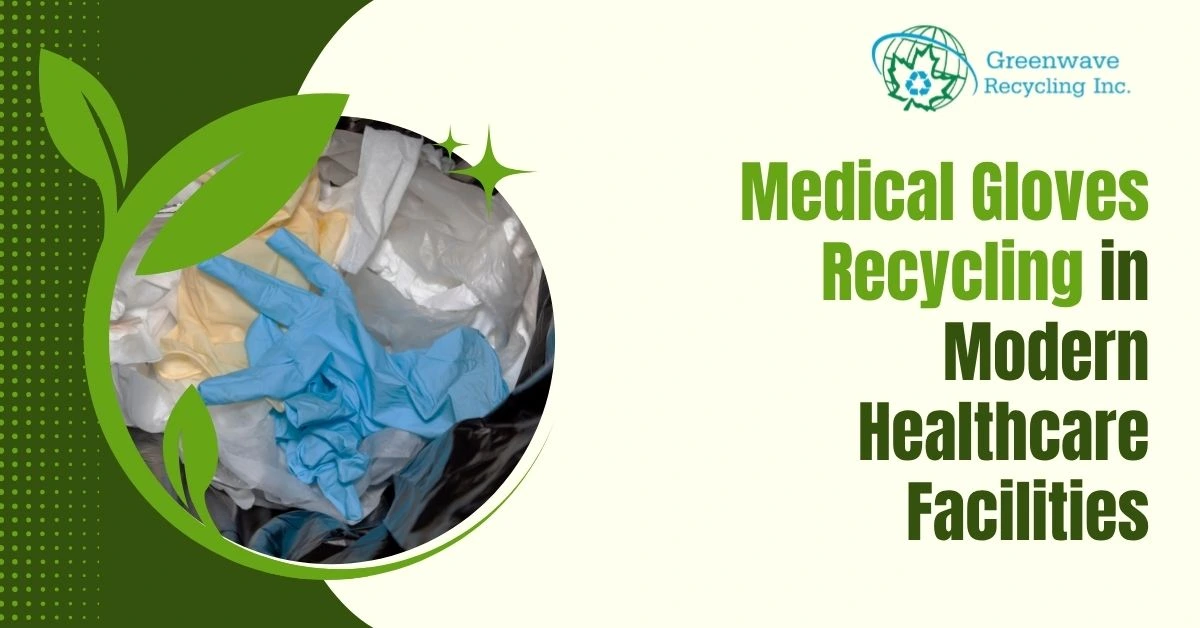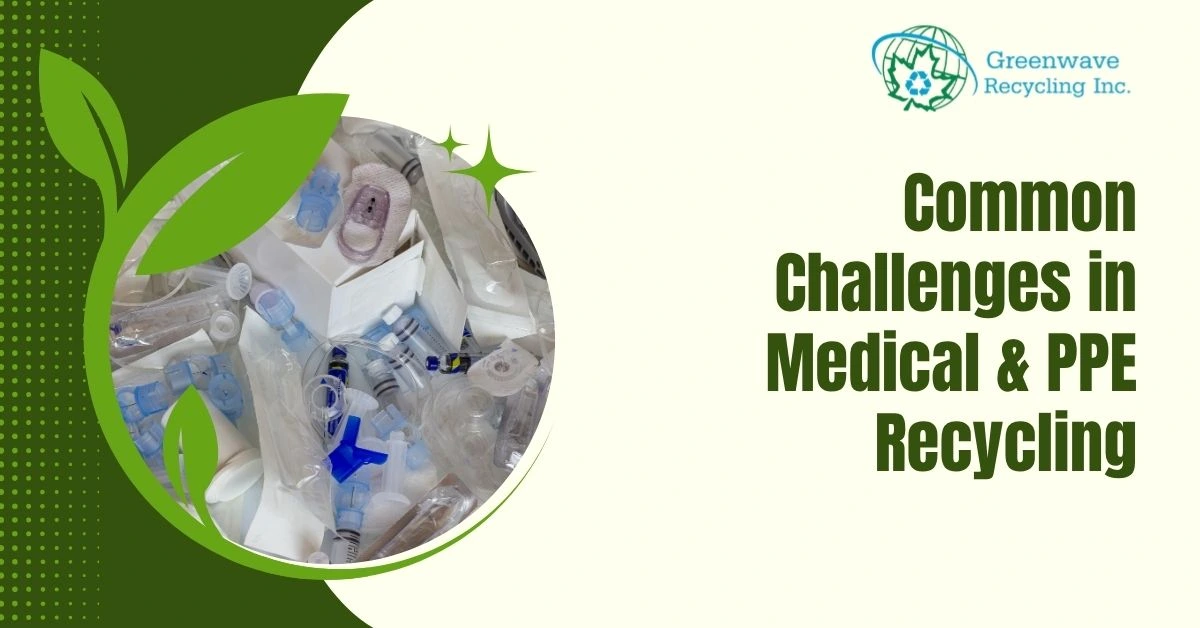

Healthcare facilities generate large volumes of personal protective equipment (PPE), including gloves, masks, gowns, aprons,…

Hospitals across Canada generate thousands of tons of waste every year, including infectious, biomedical, and general materials. Proper medical waste recycling is crucial for reducing environmental impact, protecting public health, and promoting sustainable healthcare practices. Hospitals that implement medical waste recycling not only comply with regulations but also improve operational efficiency and sustainability.
Why Medical Waste Recycling is Important for Hospitals?
Environmental Benefits
Medical waste recycling helps hospitals reduce landfill waste by diverting recyclable materials such as plastics, metals, cardboard, and sterilized PPE. Recycling reduces greenhouse gas emissions, minimizes pollution, and supports Canada’s environmental goals for healthcare sustainability.
Public Health Protection
Hospitals that adopt medical waste recycling prevent infectious and hazardous materials from contaminating landfills, water systems, and the surrounding community. Safe segregation and recycling practices ensure the protection of staff, patients, and visitors.
Cost Efficiency
Recycling programs can reduce the volume of waste requiring expensive disposal methods like incineration. Hospitals save on waste management costs, which can be reinvested into patient care and sustainability initiatives.
Compliance and Reputation
Canadian hospitals following medical waste recycling practices meet provincial and federal regulations while boosting their reputation as environmentally responsible institutions. Patients and staff increasingly value facilities committed to sustainability.
Steps to Implement Effective Medical Waste Recycling in Hospitals
1. Segregate Waste at Source
Segregate recyclable materials from infectious and hazardous waste using clearly labeled bins. Proper segregation is the foundation of any medical waste recycling program and ensures that recyclable materials are handled safely.
2. Sterilize and Handle Waste Safely
Recyclable materials that have been in contact with biological fluids should be sterilized before processing. Methods such as autoclaving or approved disinfectants ensure safety while maintaining recycling integrity.
3. Partner with Licensed Recycling Providers
Hospitals should collaborate with certified medical recyclers who can safely process plastics, metals, and other reusable materials. Licensed providers ensure compliance with Canadian healthcare regulations while maximizing recycling efficiency.
4. Train Hospital Staff
Staff training is essential for effective medical waste recycling. Training programs should cover waste segregation, sterilization, handling, and recycling procedures to ensure compliance and safety.
5. Monitor and Improve Recycling Programs
Regularly track the volume of waste recycled versus disposed of to identify inefficiencies and improve recycling outcomes. Continuous monitoring ensures hospitals achieve optimal environmental and operational benefits.
Ready to improve your hospital’s waste management?
Contact us to start building a sustainable recycling program today.
Benefits of Medical Waste Recycling for Hospitals
Implementing medical waste recycling in hospitals provides environmental, financial, and operational advantages while ensuring compliance and safety.
- Environmental Sustainability: Reduces landfill waste and greenhouse gas emissions.
- Operational Efficiency: Streamlines waste management processes and reduces disposal costs.
- Regulatory Compliance: Ensures hospitals meet Canadian federal and provincial waste disposal guidelines.
- Community Trust: Demonstrates environmental responsibility, enhancing the hospital’s reputation.
Common Challenges and Solutions
| Challenge | Solution |
| Contamination of recyclables | Train staff on segregation and sterilization. |
| Lack of awareness | Conduct ongoing education and provide clear labeling. |
| Regulatory compliance complexity | Partner with certified recycling providers and stay updated on regulations. |
| Initial setup cost | Focus on long-term savings from reduced disposal fees and sustainability initiatives. |
Frequently Asked Questions
Medical waste recycling is the process of safely segregating, sterilizing, and reprocessing recyclable materials from healthcare facilities, including plastics, metals, and certain PPE, to reduce landfill waste and promote sustainability.
Medical waste recycling helps hospitals reduce environmental impact, lower disposal costs, protect staff and patient health, and comply with Canadian regulations for safe healthcare waste management.
Hospitals can implement medical waste recycling by segregating recyclable and hazardous waste, sterilizing materials, partnering with certified recycling providers, training staff, and monitoring waste streams for continuous improvement.
Common recyclable hospital waste includes plastics, paper, cardboard, glass, metals, and sterilized personal protective equipment (PPE), while infectious and highly hazardous waste must follow strict disposal protocols.
Yes. Hospitals must comply with federal and provincial healthcare waste management regulations, which outline proper handling, segregation, treatment, and disposal, including guidelines for recyclable materials.
Conclusion
Medical waste recycling is a vital step toward sustainable healthcare for Canadian hospitals. By implementing structured recycling programs, hospitals can reduce costs, protect public health, comply with regulations, and contribute to a cleaner, safer environment.
Hospitals that embrace medical waste recycling demonstrate leadership in sustainability while improving operational efficiency and community trust. By prioritizing recycling, Canadian healthcare facilities are creating a more sustainable future for patients, staff, and the environment.
Related Posts