
In a world increasingly conscious of environmental impact, recycling paper stands out as one of…

The COVID-19 pandemic reshaped public health systems across the globe. In Canada, the mass adoption of personal protective equipment (PPE) kits—including masks, gloves, gowns, and face shields—was essential to protect healthcare workers and the public. However, as the pandemic fades, a serious environmental issue remains: what happens to millions of used PPE kits?
Recycling PPE kits post-COVID is no longer optional. It has become a national environmental and sustainability priority. Without proper PPE recycling systems, PPE waste continues to pollute landfills, waterways, and ecosystems across Canada.
Understanding PPE Kit Waste in Post-COVID Canada
PPE kits are largely made from single-use plastic polymers such as polypropylene and polyethylene. During COVID-19, these materials were designed for safety and hygiene—not sustainability.
Guidelines issued by Health Canada emphasized single-use PPE to prevent virus transmission. While effective for infection control, this resulted in an unprecedented surge in medical plastic waste.
These components are commonly used across healthcare, industrial, and commercial environments and contribute significantly to PPE waste when PPE recycling measures are not implemented properly.
Common Items in PPE Kits
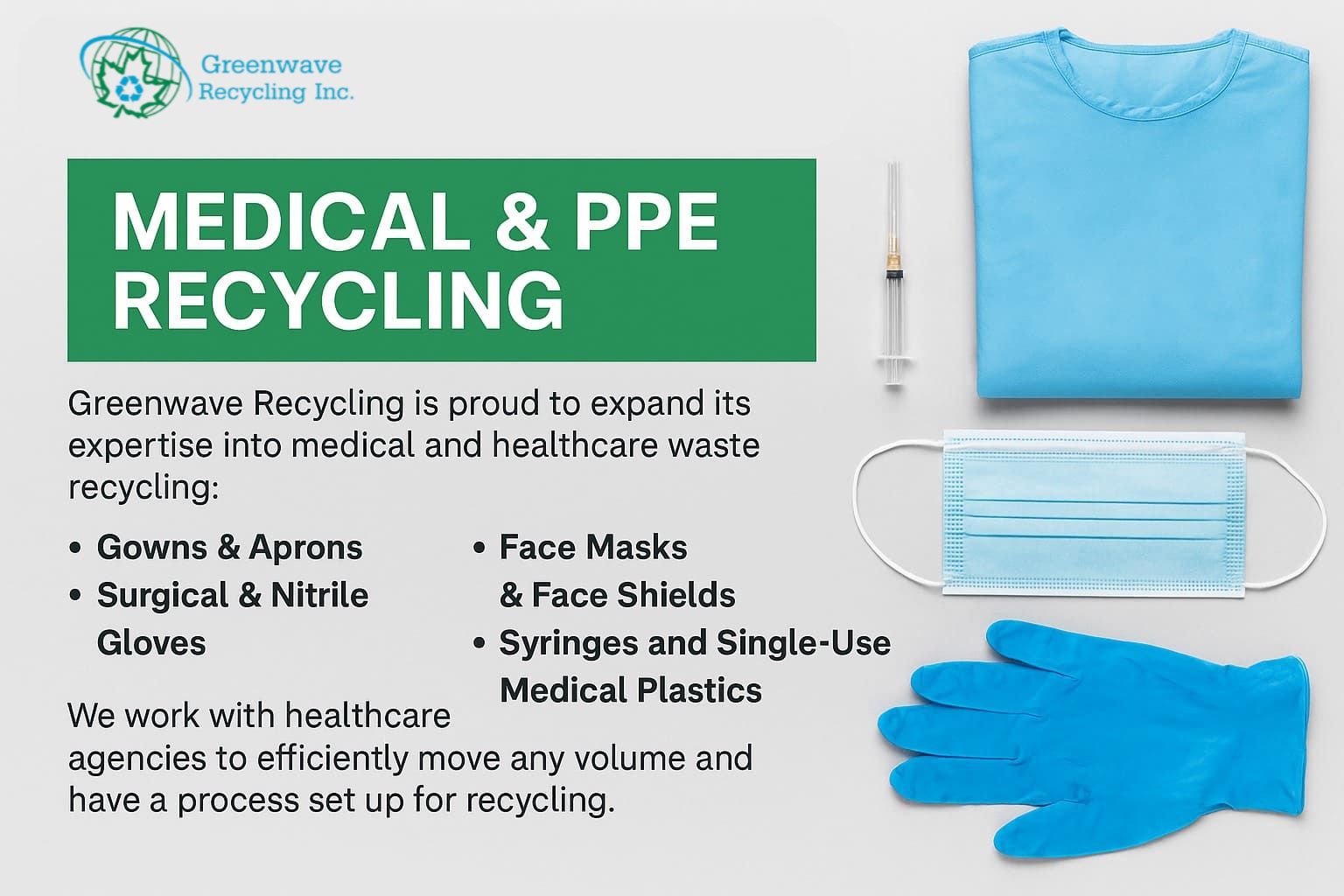
PPE kits contain a variety of single-use protective items designed to reduce health risks during medical and public safety situations.
Disposable face masks
- Nitrile or latex gloves
- Protective gowns
- Face shields and goggles
Most of these items are non-biodegradable, meaning they can persist in the environment for decades without effective PPE recycling and responsible waste management practices.
Why PPE Recycling Is Critical for Canada?
PPE recycling is critical for Canada as it helps reduce growing medical waste, prevent landfill pollution, and support sustainable healthcare practices. Recycling PPE also enables responsible resource recovery while aligning with national environmental and zero-waste goals.
1. Rising Plastic Pollution
PPE waste is now a major contributor to plastic pollution, making PPE recycling essential to reduce environmental harm.
Discarded masks and gloves break down into microplastics, contaminating soil, lakes, and marine ecosystems.
Canada’s waterways and coastlines are increasingly affected, creating long-term environmental and public health risks without effective PPE recycling solutions.
2. Overburdened Landfills
Canada’s landfills were not designed to handle large volumes of medical plastic waste, making PPE recycling increasingly critical. PPE kits take up significant space and do not decompose easily, accelerating landfill saturation without proper recycling solutions.
Recycling PPE kits helps:
- Reduce landfill dependency
- Extend landfill lifespan
- Lower waste management costs
3. Environmental Responsibility Beyond the Pandemic
Global health organizations such as the World Health Organization stress that emergency healthcare responses must also consider environmental sustainability.
Post-COVID recovery is not just about health—it’s about building resilient and sustainable systems for the future through effective PPE Recycling Practices.
Challenges in Recycling PPE Kits
Despite the urgent need, recycling PPE kits is not without challenges.
Contamination Risks
Used PPE may carry biological contaminants, which makes direct recycling unsafe.
Proper sterilization is required to eliminate health risks before PPE recycling can take place.
This added step ensures safe handling, regulatory compliance, and effective recycling outcomes.
Limited Recycling Infrastructure
Most municipal recycling programs in Canada do not accept PPE kits due to their mixed materials and potential contamination risks.
Plastic Polymer Items such as masks, gloves, and gowns, that are difficult to separate using standard recycling systems.
This limitation makes specialized PPE recycling programs essential for safe and effective waste management.
Public Awareness Gaps
Many individuals and businesses are unsure how to dispose of PPE kits responsibly.
These challenges highlight the need for specialized PPE recycling solutions rather than conventional waste streams.
Looking to set up a safe and compliant PPE recycling program? Contact us to reduce waste, meet regulations, and support a cleaner, more sustainable Canada.
How PPE Recycling Works?
Modern PPE recycling programs use advanced processes to safely recover materials.
Key Steps in PPE Recycling
- Collection & Segregation – PPE waste is collected separately from general waste
- Sterilization – Heat or chemical treatment removes biological contaminants
- Material Shredding – For Recycling PPE is broken down into plastic Fibers
- Reprocessing – Plastics are converted into reusable raw materials
These recycled materials can be used in:
- Construction products
- Industrial plastic goods
- Energy recovery systems
Why Canada Must Act Now?
Canada must act now to address the growing volume of medical and PPE waste before it overwhelms landfills and harms the environment. Immediate action supports sustainability, protects public health, and strengthens long-term waste management systems.
Environmental Protection
Canada must act now to prevent long-term environmental damage and regulatory challenges caused by improper disposal.
Immediate action will ensure sustainable waste management and compliance for PPE Recycling Management.
Environmental Protection
Recycling PPE kits reduces plastic leakage into nature and protects wildlife.
Regulatory Compliance
Stricter waste regulations are expected as Canada strengthens its environmental policies.
Corporate Sustainability Goals
Businesses and healthcare institutions are under increasing pressure to meet ESG (Environmental, Social, Governance) commitments.
Cost Efficiency
Long-term recycling solutions reduce disposal costs compared to landfill and incineration reliance.
Role of Businesses and Healthcare Facilities
Hospitals, clinics, manufacturers, and commercial facilities generate the highest volumes of PPE waste. Implementing PPE recycling programs can significantly reduce environmental impact.
Best Practices Include:
Following best practices ensures PPE waste is handled safely, responsibly, and in compliance with environmental standards.
These measures help organizations reduce risk, improve sustainability performance, and manage PPE Recycling efficiently.
- Dedicated PPE waste bins
- Partnering with certified PPE recyclers
- Employee training on waste segregation
- Regular sustainability audits
Proactive waste management enhances brand reputation and regulatory readiness.
Frequently Asked Questions
Yes, through specialized recycling programs that sterilize and process medical plastics.
PPE is often contaminated and made from mixed materials, making it unsuitable for standard recycling systems.
Used PPE may be classified as potentially infectious and must be handled accordingly.
Hospitals, laboratories, industrial facilities, and businesses using PPE at scale should prioritize PPE Recycling activities.
It ends up in landfills or the environment, contributing to plastic pollution and ecological damage.
Conclusion
The COVID-19 pandemic highlighted the importance of preparedness—but the post-COVID era demands accountability. Recycling PPE kits is essential to protect Canada’s environment, reduce plastic pollution, and build sustainable healthcare and industrial systems.
Ignoring PPE waste today will create long-term environmental costs tomorrow. Canada must act decisively by investing in PPE recycling infrastructure, enforcing responsible disposal, and encouraging sustainable practices across industries.
Recycling PPE kits is not just waste management—it’s environmental stewardship.
Related Posts