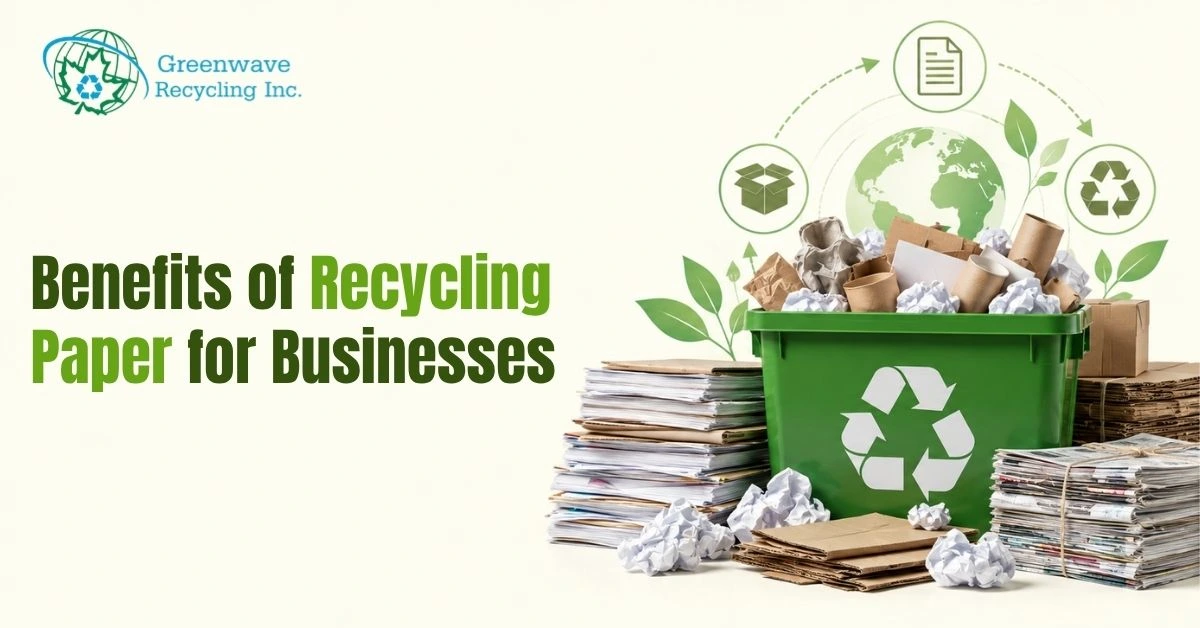

Manufacturing operations can generate rubber scrap through production offcuts, rejected components, trimming, damaged products, and…

Industrial facilities generate significant volumes of paper waste — from corrugated cardboard, paperboard, mixed office paper and manufacturing by-products. Without an effective recycling programme, this paper waste can rapidly increase disposal costs, consume valuable space, and undermine sustainability goals. In Canada, adopting cost-effective paper recycling strategies isn’t just environmentally responsible — it makes operational sense too.
By investing in tailored paper waste management solutions, industrial operations can reduce tipping fees, reclaim value from recovered fibres and support circular economy initiatives across Canada. As one report notes, paper fibres accounted for ~36% of all diverted waste in Canada in 2023.
Why Paper Recycling Matters in Industrial Settings?
For industrial facilities — including manufacturing, packaging, logistics, and distribution centres — paper and paperboard materials are among the largest waste streams. Key reasons why recycling these materials is critical include:
- Cost savings: Diverting paper waste reduces landfill and disposal fees and can reduce reliance on virgin materials.
- Resource efficiency: Paper is often made from recycled content and can be recycled multiple times.
- Sustainability & ESG: Recycling paper supports environmental goals and strengthens corporate responsibility initiatives.
- Operational space & logistics: Baled paper takes less space and is easier to handle compared to loose waste.
Types of Paper Waste in Industrial Facilities
Understanding what types of paper waste arise in industrial contexts helps facilities develop efficient recycling processes. Here’s a breakdown:
| Paper Waste Type | Source | Typical Recycling Value & Notes |
| Corrugated Cardboard (OCC) | Shipping boxes, pallets, packaging wraps | High value; widely accepted for recycling |
| Mixed Office Paper | Printouts, envelopes, administrative waste | Moderate value; high volume in admin buildings |
| Paperboard & Cartons | Food packaging, retail packaging | Valuable if sorted; contamination lowers value |
| Production By-product Paper | Trim from manufacturing or converting lines | Good opportunity for internal recycle programmes |
| Specialty Paper (laminated etc) | Coated paperboard, adhesive backed paper | Lower salvage value; needs specialised processing |
Sorting and segregating these streams at source ensures higher quality feedstock, pricing benefits and reduced contamination costs.
Cost-Effective Strategies for Industrial Paper Recycling
1. Conduct a Waste Audit
Begin by analysing current paper waste volumes, disposal costs and recycling options. This audit establishes a baseline for improvement and cost reduction.
2. Source Separation & Baling
Equip your facility with dedicated bins or compactors for specific paper waste streams. Baling corrugated cardboard and paperboard improves transport efficiency and reduces hauling costs.
3. Partner with Certified Recycling Providers
Working with a recycling specialist ensures your paper waste is processed, tracked and reported correctly. In Canada, many providers support industrial clients with logistics and documentation.
4. Monitor Recycling Metrics & Set Targets
Track metrics such as tonnes diverted, cost per ton recycled, contamination rate, and disposal cost avoided. Set measurable targets to drive continuous improvement.
5. Integrate Paper Recycling into Your ESG & Sustainability Framework
Highlight your paper recycling performance in sustainability and ESG disclosures. Recycled paper supports circular economy metrics and stakeholder reporting.
6. Adopt Technology & Automation
Utilise shredders, optical sorters or baling machines to increase efficiency and reduce labour costs tied to manual sorting and handling.
Looking to reduce paper waste and cut disposal costs? Contact us for tailored paper recycling solutions that drive sustainability and savings.
Financial & Environmental Benefits
Cleanup and disposal of paper waste can carry high hidden costs. According to Canadian recovery data, recycling paper uses significantly less energy compared to virgin Fibre processing.
| Benefit | Industry Impact |
| Reduced disposal fees | Savings from fewer trips to landfill, smaller waste contracts |
| Revenue from recycled fibre | Some mills or brokers pay for clean, sorted paper |
| Lower virgin material cost | Recycled content reduces need for new pulp |
| Smaller environmental footprint | Less logging, lower GHG emissions from fibre production |
Best Practices for Implementation
- Engage employees: Train staff in waste segregation and ensure clear signage at bins.
- Audit regularly: Review waste streams quarterly to identify contamination and improvement areas.
- Contamination control: Keep oil, food residue, and adhesives out of paper streams — these lower value and increase costs.
- Reporting: Ensure your recycling partner provides documentation on diverted tonnes and final processing destination.
- Continuous improvement: Use audit results to expand recycling streams (e.g., from OCC to specialty paper) and drive performance.
Challenges & How to Mitigate Them
Even with well-designed programmes, industrial paper recycling faces challenges:
- Contamination: Mixed wastes reduce quality and increase rejection rates.
- Inconsistent recycling markets: Fluctuating demand for fibre can affect revenue.
- Logistics costs: In remote locations or smaller facilities, transportation can reduce savings.
To address these, partner with experienced recyclers, optimise logistics (e.g., consolidate loads), and maintain high sorting standards to keep contamination low.
Frequently Asked Questions
Industrial paper recycling is the process of collecting, sorting, and reprocessing waste paper from factories, warehouses, and packaging units into reusable materials to reduce landfill waste and production costs.
By recycling paper waste, industries reduce landfill disposal fees, recover valuable materials, and lower the need for new raw paper production — all of which contribute to significant long-term savings.
Common recyclable paper types include corrugated cardboard, office paper, newspaper, packaging material, and production scrap from manufacturing processes.
Paper recycling conserves natural resources, minimizes greenhouse gas emissions, and supports ESG (Environmental, Social, and Governance) goals by promoting circular economy practices.
Businesses can begin by conducting a waste audit, partnering with certified recyclers, setting up collection points, and implementing a clear recycling policy across their facility.
Conclusion
Implementing a cost-effective paper recycling programme in industrial facilities is a win-win strategy — reducing waste management costs while boosting sustainability credentials. With strong sorting, partner relations and continuous tracking, industrial operations in Canada can significantly benefit from paper waste management solutions.
Recycled paper remains one of the most accessible and efficient waste streams to divert. With national recycling rates for paper fibres representing the largest portion of diverted waste in Canada, it’s clear that industrial players can make a substantial impact.
Related Posts