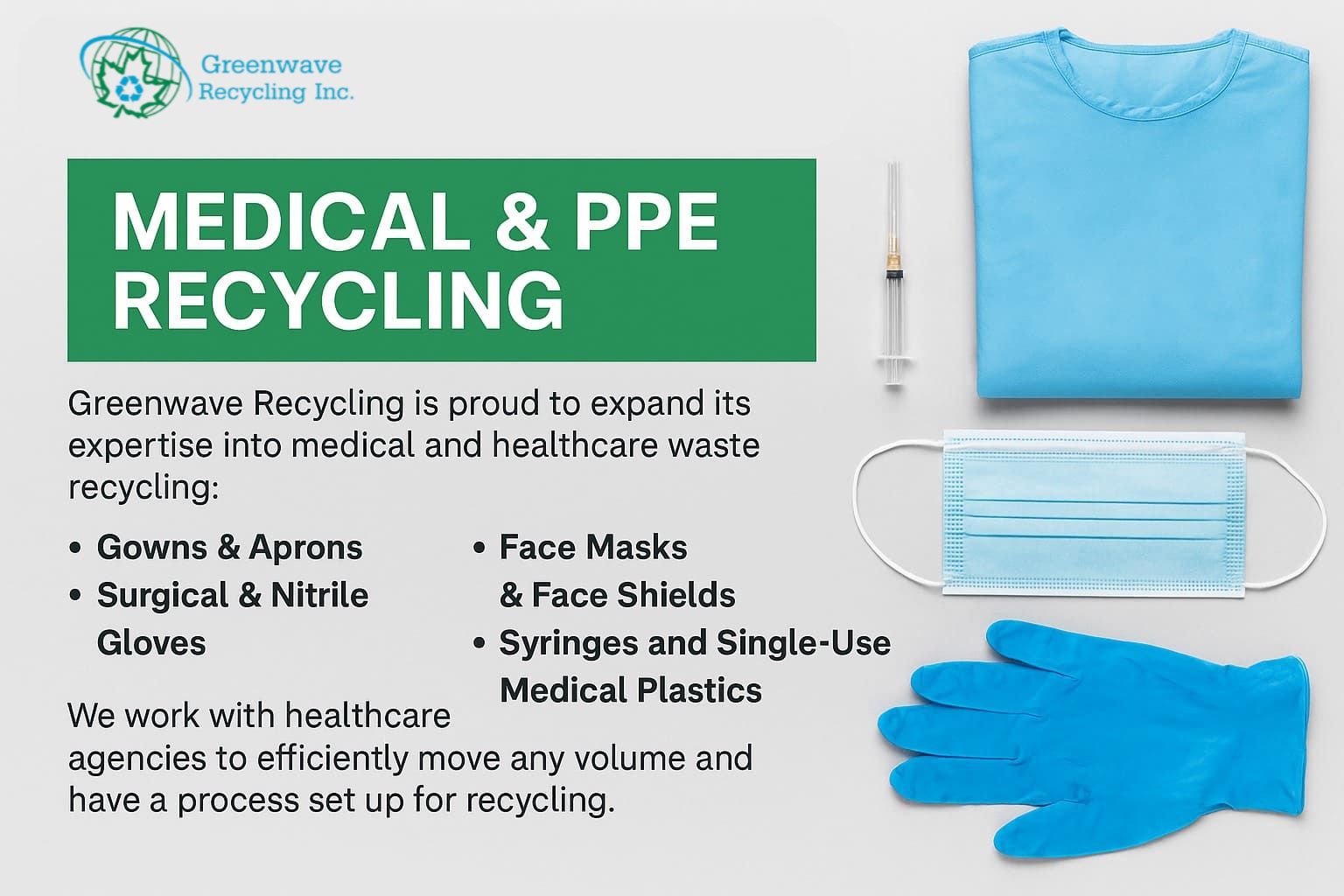

The COVID-19 pandemic permanently changed how safety is managed across Canada. From healthcare facilities to…
Expired nitrile gloves are a growing waste concern across Canada, especially in healthcare facilities, laboratories, food processing units, and industrial workplaces. While nitrile gloves are essential for safety and hygiene, their single-use nature and synthetic composition make disposal challenging once they expire.
This Expired Nitrile Gloves Recycling Guide explains what happens to expired gloves, why recycling matters, how the process works, and what Canadian organizations can do to manage this waste responsibly.
What Are Expired Nitrile Gloves?
Expired nitrile gloves are gloves that have passed their manufacturer-specified shelf life. Over time, nitrile material can lose elasticity, strength, and protective performance, making the gloves unsuitable for medical or industrial use.
Even though they are no longer safe for use, expired nitrile gloves are still made from durable synthetic rubber that does not break down naturally, which creates long-term environmental challenges if disposed of incorrectly.
Why Expired Nitrile Gloves Recycling Is Important?
Canada generates millions of tonnes of plastic and medical waste each year, and expired nitrile gloves contribute significantly to this volume. Most nitrile gloves end up in landfills or are incinerated, both of which have environmental consequences.
Recycling expired nitrile gloves helps to:
- Reduce landfill waste and plastic pollution
- Lower greenhouse gas emissions from incineration
- Recover valuable synthetic rubber materials
- Support circular economy and zero-waste initiatives
- Strengthen sustainability and ESG commitments
With growing focus on sustainable healthcare and industrial practices, recycling expired nitrile gloves is becoming a responsible and forward-looking waste solution.
Are Expired Nitrile Gloves Considered Medical Waste?
The classification of expired nitrile gloves in Canada depends on how and where they were used:
- Unused but expired gloves are generally considered non-hazardous industrial or commercial waste.
- Used gloves from healthcare or lab settings may be classified as biomedical waste due to potential contamination.
Proper segregation is critical. Gloves that have not been exposed to bodily fluids or hazardous substances are often eligible for glove recycling, while contaminated gloves require treatment before disposal or recycling.
Looking to recycle expired nitrile gloves responsibly? Contact us to implement safe, compliant, and sustainable nitrile gloves recycling solutions across Canada.
How Expired Nitrile Gloves Recycling Works?
Recycling expired nitrile gloves follows a structured process to ensure safety and environmental compliance.
1. Collection and Segregation
Expired gloves are collected separately from general waste and biomedical waste. Clear labelling and dedicated containers help prevent contamination.
2. Inspection and Sorting
Gloves are inspected to confirm they are free from biological or chemical contamination. Clean, unused expired gloves are separated for recycling.
3. Shredding and Processing
The gloves are shredded into smaller pieces and processed to remove impurities. This prepares the material for reuse.
4. Material Recovery
Processed nitrile material is converted into reusable raw material that can be used in industrial applications such as rubber products, mats, or construction materials.
5. Final Recycling or Disposal
Any non-recyclable residue is disposed of safely, while recyclable material re-enters the supply chain.
Common Challenges in Recycling Expired Nitrile Gloves
Despite growing interest, recycling expired nitrile gloves in Canada faces several challenges:
- Limited recycling infrastructure for synthetic rubber
- Risk of contamination from mixed waste streams
- Higher processing costs compared to disposal
- Lack of awareness about recycling options
These challenges can be overcome through better segregation, staff training, and partnerships with specialized recycling programs.
Who Should Recycle Expired Nitrile Gloves?
Expired nitrile gloves recycling is especially relevant for:
- Hospitals and clinics
- Diagnostic and research laboratories
- Pharmaceutical manufacturers
- Food processing and packaging facilities
- Industrial and manufacturing units
- PPE distributors and warehouses
Any organization handling gloves in bulk can significantly reduce waste by implementing a recycling program.
Environmental Impact of Not Recycling Expired Gloves
When expired nitrile gloves are sent to landfill, they can take hundreds of years to break down, fragmenting into microplastics that contaminate soil and waterways. Incineration, while effective for volume reduction, produces emissions and ash that require further handling.
Recycling offers a more sustainable alternative by reducing pollution and conserving resources.
Best Practices for Managing Expired Nitrile Gloves Waste
- Track glove expiry dates to avoid overstocking
- Store expired gloves separately from biomedical waste
- Educate staff on proper segregation procedures
- Conduct waste audits to identify recycling opportunities
- Prioritize recycling over disposal whenever safe and permitted
These steps help organizations reduce waste while maintaining safety and compliance.
The Future of Expired Nitrile Gloves Recycling in Canada
As Canada moves toward stronger sustainability and zero-waste goals, recycling programs for PPE and nitrile gloves are expected to expand. Innovation in material recovery, improved recycling technologies, and increased awareness are driving change across healthcare and industrial sectors.
Expired nitrile gloves recycling is shifting from a niche practice to an essential part of responsible waste management.
Frequently Asked Questions
Yes, expired nitrile gloves can be recycled if they are unused and free from contamination. Clean, expired gloves are suitable for specialized recycling programs.
Unused expired nitrile gloves are generally non-hazardous. However, gloves used in healthcare or laboratory settings may be classified as biomedical waste if contaminated.
Nitrile gloves are made from synthetic rubber that does not biodegrade easily. Sending them to landfill contributes to long-term plastic pollution and microplastics.
They are collected, inspected, shredded, and processed into reusable raw materials that can be used in industrial or manufacturing applications.
Hospitals, clinics, labs, food processing units, manufacturers, warehouses, and PPE distributors can all benefit from recycling expired nitrile gloves.
Conclusion
This Expired Nitrile Gloves Recycling Guide highlights why expired gloves should not be treated as ordinary waste. With proper segregation, safe handling, and recycling, Canadian organizations can significantly reduce environmental impact while supporting circular economy principles.
Recycling expired nitrile gloves is not just a waste solution—it is a step toward a more sustainable and responsible future.
Related Posts