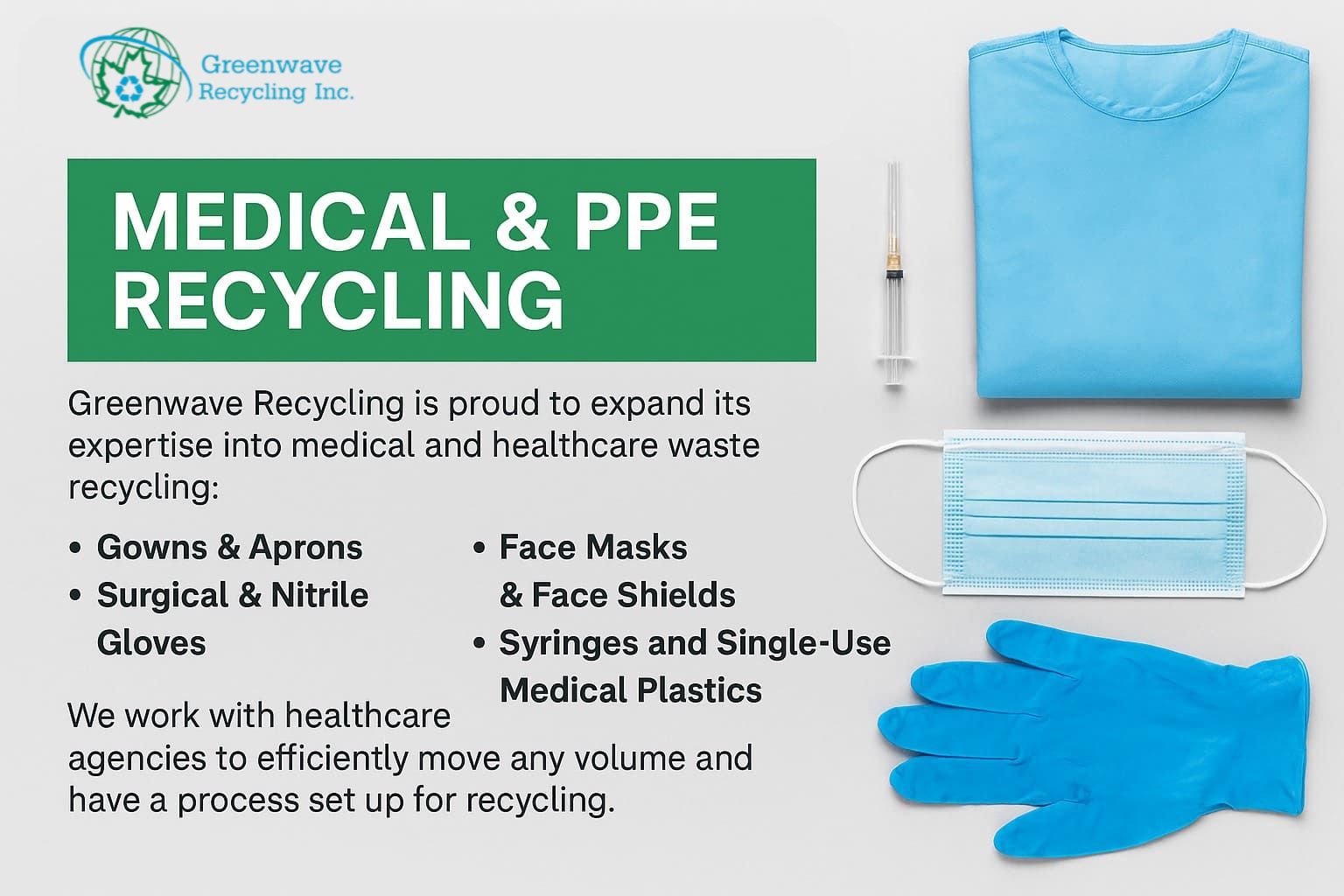

The COVID-19 pandemic reshaped public health systems across the globe. In Canada, the mass adoption…

Single-use medical plastics such as syringes, IV bags, surgical gloves and PPE (personal protective equipment) have become indispensable as part of patient safety and infection control. Nevertheless, the increased amounts of medical waste raises concerns about the environment. Improper disposal practices of this medical waste lead to plastic pollution in the oceans, toxic vapor emissions and disposal of waste into landfills for years to come.
To mitigate these practices, hospitals and healthcare organizations are now addressing sustainable disposal of single-use medical plastics, PPE recycling and implementing wiser medical waste management.
Understanding Single-Use Medical Plastics
Single-use medical plastics are crucial to today’s healthcare—from syringes and IV bags to protective gear—and include products that have been included in inventive PPE recycling programs, but they also are a growing source of waste.
What Are Single-Use Medical Plastics?
Single-use medical plastics are disposable healthcare products intended for single use to protect sterility. Examples of single-use medical plastics include surgical masks, gloves, syringes, IV tubing, and protective gowns.
Why Are They Used Widely?
- To provide, prevention against cross-contamination
- To provide, cost-effective infection control
- To provide, when necessary, hygiene for high-risk environments
And while these items are important to healthcare, items create a significant medical waste management challenge.
Environmental Impact of Medical Plastic Waste
The mishandling of single-use medical plastics results in the following damage:
- Overstuffed landfills full of non-biodegradable plastics.
- No control and harmful emissions from waste combustors.
- Microplastic pollution in soil and water.
All this makes sustainable healthcare waste disposal an urgent global priority.
Eco-Friendly Disposal Methods for Single-Use Medical Plastics
Environmentally conscious disposal methods for single-use medical plastics have evolved with technologies such as PPE recycling, medical waste processing, and biodegradable materials to limit the ecological effects of healthcare.
Segregation at Source
Proper waste separation in the hospital will keep recyclables and hazardous material from mixing, thus bettering hospital medical waste management.
PPE Recycling Programs
Certain facilities specifically focus on PPE recycling – masks, gloves, gowns, etc. The healthcare item is gathered, sterilized, and recycled into reusable feedstock, thus diminishing the reliance on virgin plastics.
Recycling and Reprocessing
Non-contaminated items can be recycled, such as packaging materials or other non-hazardous plastic waste. By recycling waste into new products, we can lessen the total medical plastics waste footprint.
Biodegradable Alternative
Biodegradable medical plastics and plant-based polymers are emerging to replace traditional plastics.
Waste-to-Energy Solutions
Incineration systems are coming online that can capture the energy release from the burning of medical waste thus reducing the amount of waste in landfills and creating electricity.
Circular Economy in Healthcare
Moving towards circular economies will update processing models so that medical plastics and PPE are reprocessed and reintegrated into supply chains.
Want expert guidance on eco-friendly disposal methods for single-use plastics? Contact us now and let’s create a sustainable healthcare system.
Case Studies and Global Practices
- Europe: Hospitals implement PPE recycling projects alongside strict medical waste management laws.
- United States: Healthcare facilities partner with recyclers to repurpose plastic packaging and surgical tools.
- Asia: Pilot initiatives focus on biodegradable PPE to reduce environmental footprints.
Challenges in Eco-Friendly Disposal
Despite progress, challenges remain:
- High costs of medical waste management infrastructure.
- Limited access to PPE recycling facilities in developing nations.
- Balancing infection control with sustainability.
Different Methods of Eco-Friendly Disposal for Single-Use Medical Plastics
| Disposal Method | Eco-Friendliness | Challenges | Best Use Case |
| PPE Recycling | High | Requires sterilization, infrastructure | Gloves, masks, gowns |
| Medical Plastic Recycling | High | Limited facilities, cost | Packaging & non-contaminated plastics |
| Waste-to-Energy | Moderate | Emissions control needed | Contaminated medical waste |
| Biodegradable Alternatives | Very High | Limited availability | PPE, syringes, packaging |
| Segregation at Source | Essential | Needs staff training | All healthcare facilities |
Future Innovations in Medical Plastic Waste Management
- AI-driven sorting systems for more accurate waste segregation.
- Advanced biopolymers that naturally decompose.
- Stronger regulations for sustainable medical waste management.
Practical Tips for Hospitals & Clinics
- Train staff in eco-friendly medical waste disposal practices.
- Partner with PPE recycling companies and certified medical waste recyclers.
- Switch to biodegradable packaging and reusable products wherever possible.
Frequently Asked Questions
It reduces pollution, prevents toxic emissions, and promotes sustainable medical waste management.
PPE recycling converts used gloves, masks, and gowns into reusable raw materials, reducing landfill waste and conserving resources.
Not all. Only non-contaminated and sterilized items are suitable for medical plastic recycling.
Biodegradable plastics, reusable surgical tools, and plant-based PPE.
By training staff, investing in PPE recycling solutions, and partnering with certified recyclers.
Conclusion
The eco-friendly disposal of single-use medical plastics is a global necessity. With better medical waste management systems, investment in PPE recycling, and adoption of sustainable materials, healthcare providers can reduce their environmental footprint without compromising patient safety.
The future of healthcare lies in embracing a circular economy, reducing dependency on virgin plastics, and building a sustainable, greener medical system.
Related Posts