
Healthcare facilities across Canada generate a significant amount of waste from single-use protective equipment, including…

Hospitals across Canada use large volumes of nitrile gloves every day to maintain hygiene, protect healthcare workers, and prevent the spread of infection. However, expired nitrile gloves are becoming a growing waste challenge for hospitals, especially when gloves reach their shelf life unused or remain in storage after bulk procurement.
Expired nitrile gloves recycling for hospitals offers a safe, compliant, and sustainable way to manage this waste while reducing environmental impact and supporting Canada’s healthcare sustainability goals.
Why Expired Nitrile Gloves Are a Growing Issue in Hospitals?
Canadian hospitals often purchase nitrile gloves in bulk to ensure uninterrupted supply during emergencies and peak demand. Over time, unused gloves may expire, losing elasticity and protective integrity. Although expired gloves are no longer suitable for medical use, they are still made from durable synthetic rubber that does not biodegrade.
Without proper recycling, expired nitrile gloves are typically sent to landfill or incineration, contributing to plastic pollution, higher disposal costs, and increased greenhouse gas emissions.
What Makes Nitrile Gloves Difficult to Dispose Of?
Nitrile gloves are manufactured from synthetic polymers designed for durability, chemical resistance, and flexibility. While these properties make them ideal for medical use, they also make disposal challenging.
Key disposal challenges include:
- Long decomposition timelines
- Risk of contamination when mixed with biomedical waste
- Limited recycling awareness within hospital systems
- Higher costs associated with incineration
This is why expired nitrile gloves recycling for hospitals is emerging as a practical and environmentally responsible solution.
Are Expired Nitrile Gloves Considered Biomedical Waste?
In Canada, waste classification depends on usage:
- Unused but expired nitrile gloves are generally considered non-hazardous waste.
- Used gloves exposed to bodily fluids or hazardous substances are classified as biomedical waste and require special handling.
Hospitals that properly segregate unused expired gloves can safely divert them into recycling streams instead of biomedical disposal, reducing waste volume and cost.
How Expired Nitrile Gloves Recycling Works for Hospitals?
Expired nitrile gloves recycling for hospitals begins with separating unused gloves from contaminated medical waste. The gloves are then collected, inspected, and processed into reusable materials through safe and compliant recycling methods.
Segregation at Source
Hospitals separate unused expired gloves from contaminated medical waste using labelled containers and internal protocols.
Collection and Storage
Expired gloves are stored in secure, dry areas to prevent contamination before recycling.
Inspection and Sorting
Gloves are checked to ensure they are clean, unused, and suitable for recycling.
Processing and Material Recovery
The gloves are shredded and processed into reusable raw materials that can be used in industrial or manufacturing applications.
Responsible Disposal of Residue
Any non-recyclable material is handled using compliant disposal methods.
This structured approach allows hospitals to safely recycle expired gloves while maintaining infection control standards.
Looking to recycle expired nitrile gloves responsibly? Contact us for a safe, compliant, and sustainable recycling solution for hospitals across Canada.
Benefits of Recycling Expired Nitrile Gloves
Recycling expired nitrile gloves helps hospitals reduce landfill waste, lower disposal costs, and minimize environmental impact. It also supports sustainability goals while improving responsible medical waste management practices.
Environmental Benefits
- Reduces landfill waste and plastic pollution
- Prevents microplastic contamination
- Lowers emissions compared to incineration
Operational and Cost Benefits
- Reduces biomedical waste disposal volumes
- Lowers waste handling and treatment costs
- Improves storage efficiency
Sustainability and ESG Impact
- Supports hospital sustainability initiatives
- Aligns with circular economy principles
- Strengthens ESG and environmental reporting
Best Practices for Hospitals Managing Expired Nitrile Gloves
- Track inventory and expiry dates to reduce overstock
- Train staff on waste segregation procedures
- Separate expired gloves from contaminated PPE
- Conduct regular waste audits
- Partner with specialized recycling programs
- Prioritize recycling over disposal whenever permitted
These practices improve efficiency while maintaining safety and compliance.
The Future of Hospital PPE Recycling in Canada
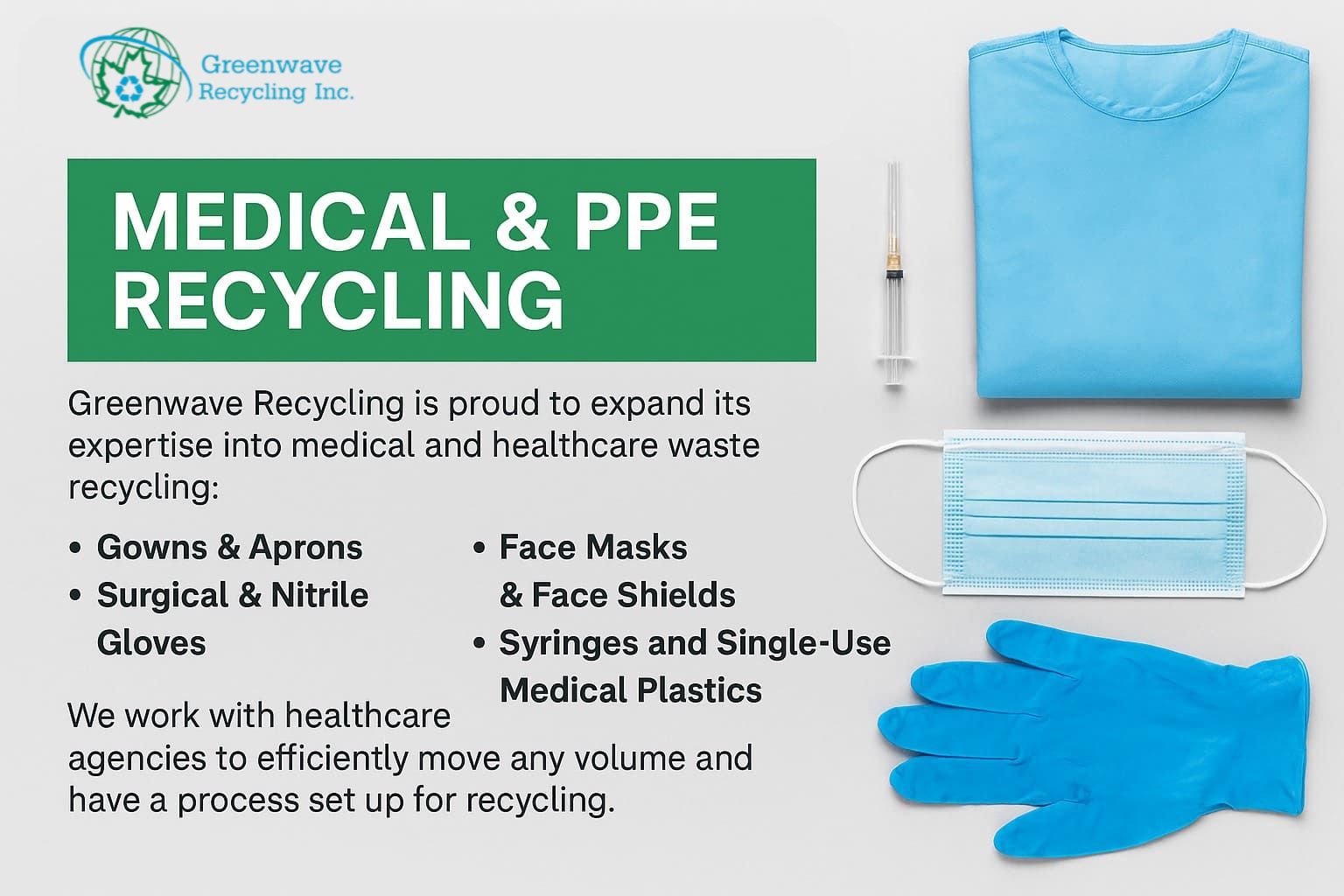
With increased focus on sustainable healthcare, hospitals across Canada are transitioning from disposal-based models to recycling-driven waste management. Expired nitrile gloves recycling is becoming an important part of broader hospital sustainability strategies, alongside recycling of masks, gowns, and other PPE.
Innovation in recycling technology, improved segregation systems, and stronger sustainability policies are expected to further expand recycling options for hospitals in the coming years.
Frequently Asked Questions
Yes. Unused and uncontaminated expired nitrile gloves can be recycled through specialized recycling programs.
Unused expired gloves are typically non-hazardous, while used gloves exposed to fluids are classified as biomedical waste.
Recycling reduces landfill waste, lowers disposal costs, and supports hospital sustainability and ESG goals.
They are collected, inspected, shredded, and processed into reusable raw materials for industrial applications.
Contaminated gloves must follow biomedical waste treatment and disposal protocols before recycling or disposal.
Conclusion
Expired nitrile gloves recycling for hospitals is no longer just an environmental option—it is a practical solution to rising waste volumes, higher disposal costs, and sustainability expectations in Canadian healthcare. By recycling unused expired gloves, hospitals can reduce environmental impact, improve operational efficiency, and demonstrate leadership in responsible waste management.
Related Posts